Wells Fargo Names Faraz Shafiq as Head of AI Products and Solutions
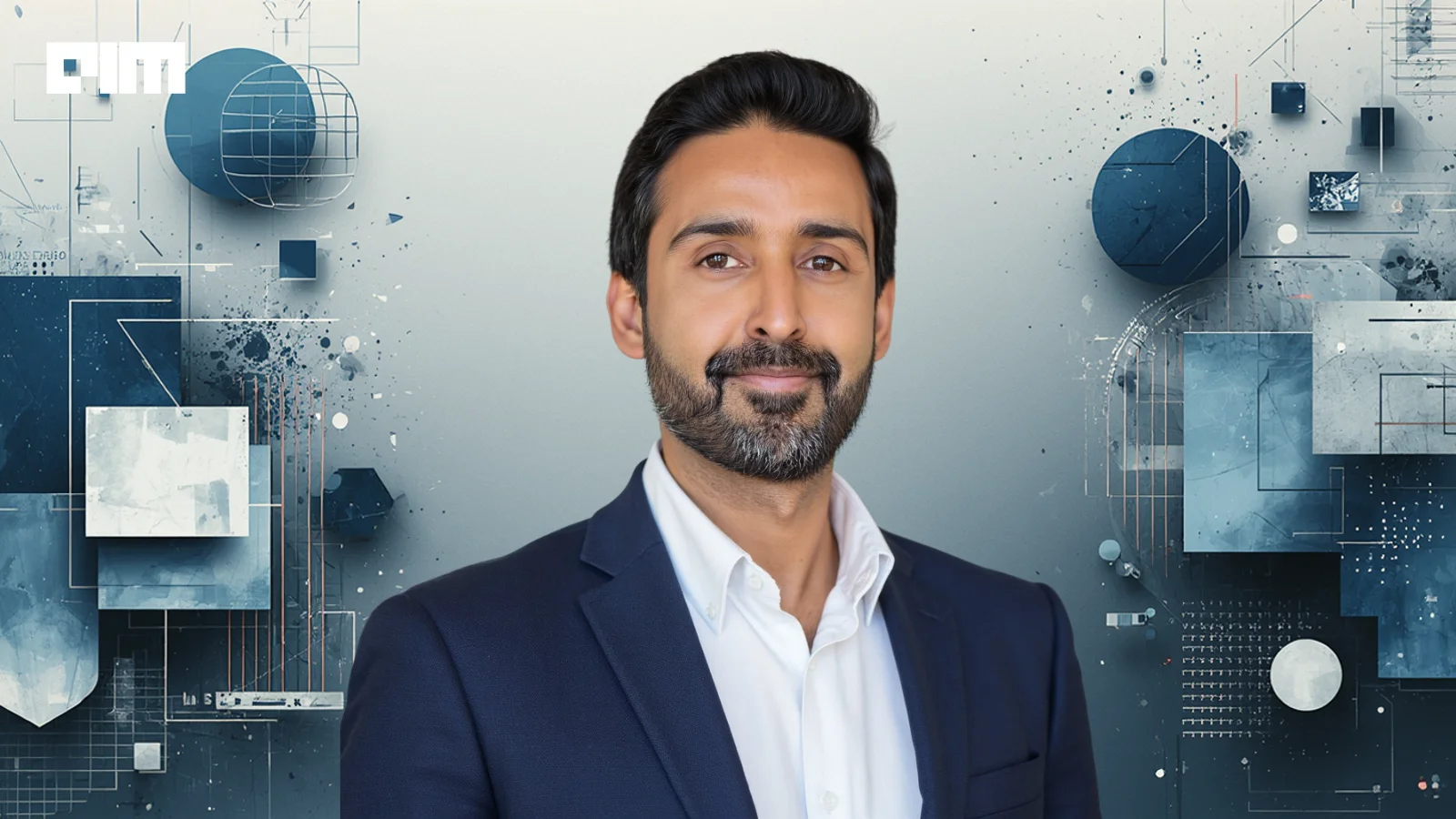
Shafiq's job is to oversee "the vision, roadmap, and development for enterprise-wide, AI-powered products."
Wells Fargo & Company announced on January 26, 2026, that it has appointed Faraz Shafiq as Head of AI Products and Solutions, effective February 9.
Shafiq arrives at Wells Fargo from Amazon Web Services, where he served as Field Chief Technology Officer for Generative and Agentic AI. His experience spans over 20 years. He held the title of Worldwide Head of Product and GTM at AWS, where he drove $9 billion in direct revenue and influenced $24 billion in total AWS revenue growth (30% of AWS's overall expansion).
Before AWS, he built and scaled data and AI operations at Verizon (where he served as Chief Data and AI Officer), AT&T, Google, and Cambia Health Solutions, a $10 billion healthcare enterprise.
Shafiq is not a technologist who learned AI in isolation. He has repeatedly architected the organizational, product, and go-to-market infrastructure required to deploy AI at scale across massive, regulated enterprises.
"Faraz's deep expertise in generative and agentic AI and proven leadership in scaling enterprise platforms will accelerate the execution of our strategy of using AI to transform how we work and how we serve our customers, and ultimately propel the growth of the bank," said Saul Van Beurden, Head of AI and Co-CEO of Consumer Banking and Lending.
First comes Wells Fargo's asset cap, a regulatory constraint imposed after the 2016 accounts scandal was lifted by the Federal Reserve in June 2025. Overnight, the bank regained $30 billion in excess capital above regulatory minimums, unshackling growth potential for the first time in seven years. CEO Charlie Scharf has signaled that Wells Fargo will deploy this capital into AI-driven efficiency and new business initiatives.
Second, the industry is already moving. Deloitte predicts that by 2027, 50% of enterprises using generative AI will deploy agentic AI, autonomous systems capable of making real-time decisions, optimizing workflows, and adapting to changing market conditions without human intervention. Wells Fargo cannot afford to lag.
Under Van Beurden's leadership (appointed November 2025), the bank has already trained 90,000+ employees on AI, deployed AI tools to 180,000 desktops, and achieved 30-35% gains in engineering productivity through AI-assisted coding. The foundation is laid and Shafiq's mandate is to accelerate execution.
Third, competitive pressure is mounting. Specialized fintech players have proven that AI-powered customer experiences drive engagement and retention. Wells Fargo's virtual assistant, Fargo (developed in partnership with Google Cloud), processed 245.4 million customer interactions in 2024 alone, more than doubling initial projections. But static efficiency gains will not be enough.
Wells Fargo is deploying agentic AI to automate routine tasks, provide personalized financial guidance, deliver real-time insights, and streamline internal workflows, all designed to enhance decision-making speed and customer experience.
Shafiq's appointment marks a shift from proof-of-concept to product-at-scale. His job is not to run labs or sponsor research projects. It is to oversee "the vision, roadmap, and development for enterprise-wide, AI-powered products."
He will identify companywide business processes that can be enhanced or reimagined through generative and agentic AI, architect the technology stack, manage cross-functional teams, and ensure that every deployment delivers measurable business value.
Early wins are already evident. Pega Customer Decision Hub, deployed across Wells Fargo's channels, has boosted customer engagement rates by 3-10x. Machine learning algorithms are enhancing fraud detection. But these are first-generation applications. Second-generation agentic AI will move beyond decision support into autonomous execution.
However, CEO Scharf disclosed in December 2025 that Wells Fargo expects additional workforce reductions in 2026 as AI productivity gains accelerate. The bank is signaling higher severance costs and acknowledging that some roles will be eliminated.
Scharf framed this as "positive reality," but the implications are great. Shafiq's mandate necessarily includes workforce transition planning, skills retraining, and organizational redesign as well.