
Goldman Sachs and Anthropic Team Up to Build AI Agents for Core Banking Tasks
Goldman Sachs is quietly turning its back office into a live testbed for Anthropic’s Claude-based AI agents, starting with trade accounting, compliance, and client onboarding.
By Sachin Mohan ·
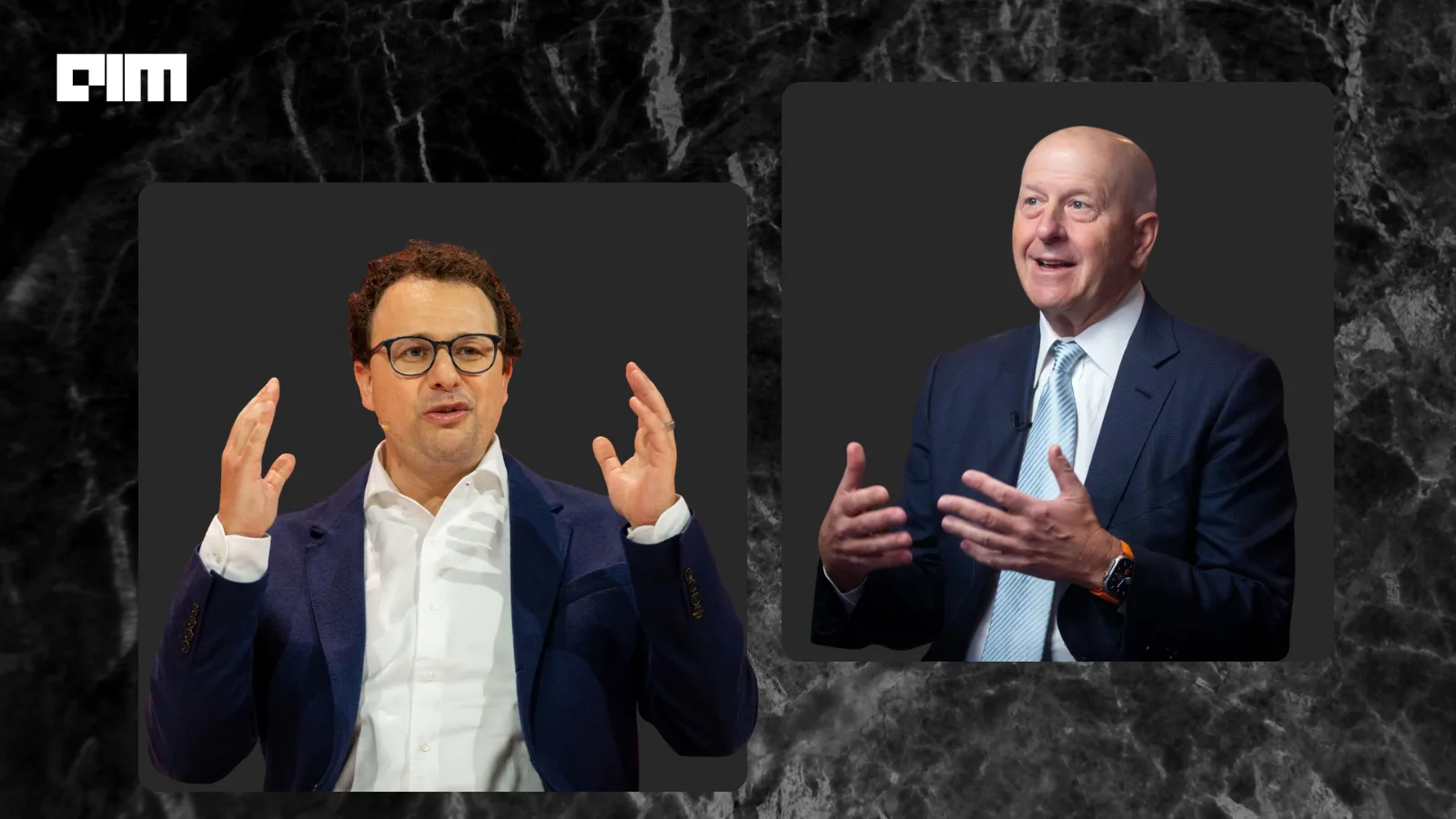
Goldman Sachs has spent the last six months working with embedded engineers from Anthropic to build Claude-powered agents that take on some of the most time‑intensive, rules‑heavy work inside the firm, starting with trade and transaction accounting, and client vetting and onboarding.
The collaboration, first detailed by CNBC and confirmed by Goldman to Reuters, shows how AI agents are becoming the core machinery of global finance.
The project sits at the top of a multiyear plan announced by CEO David Solomon to reorganize Goldman around generative AI. Even as trading and advisory revenue surge, Solomon has been clear that the bank will “constrain headcount growth” during this shift.
Anthropic’s Claude is their way to compress the labor and time spent in back‑office operations while avoiding immediate mass layoffs.
Chief information officer Marco Argenti described the agents as “a digital co‑worker” for scaled, complex, process‑intensive roles. Instead of a human manually reconciling trades or stepping through know‑your‑customer (KYC) checklists, a Claude‑based agent parses documents, applies internal and regulatory rules, flags exceptions, and prepares work for human sign‑off.
Goldman expects the technology to “collapse the amount of time” these functions take and plans to launch the first agents “soon,” though it has not committed to a public timeline.
Expanding From Code to Compliance Workflows
Goldman’s partnership with Anthropic started in engineering. In 2025 the bank piloted Devin, an autonomous AI coding assistant, to boost developer productivity. That effort supported the idea that sophisticated models could take meaningful work off human hands. But the bigger surprise, according to Argenti, came when the team pushed beyond code.
“Claude is really good at coding,” he told CNBC. “Is that because coding is kind of special, or is it about the model’s ability to reason through complex problems, step‑by‑step, applying logic?”
Testing Claude on accounting and compliance tasks, domains that require ingesting huge volumes of documents and then making rule‑bound judgments, convinced executives it was the latter. The same reasoning engine that navigates APIs and unit tests could also interpret accounting standards, internal policies, and regulatory language.
That realization helped the bank turn a developer productivity play into a broader AI‑agent strategy touching accounting ledgers, middle‑office operations, and front‑to‑back client workflows.
The near‑term focus is on internal functions where cycle time and error rates matter more than presentation polish, but Argenti has already floated future agents for investment banking pitchbooks and even employee surveillance.
Goldman’s work also plugs into Anthropic’s own enterprise push. The Claude family, including products like Claude Cowork, is explicitly aimed at white‑collar tasks where AI acts as an execution layer rather than just a chatbot.
Anthropic projects that by 2026 roughly 85% of its revenue will come from enterprises, with financial institutions like Goldman and JPMorgan as flagship customers. NVIDIA’s Jensen Huang has publicly praised Claude’s coding and reasoning capabilities, adding to investor perception that Anthropic will be one of the durable winners in the model race.
Rewiring Economics, Not Just Cutting Jobs
A key factor in Goldman’s move is what it means for jobs. The firm employs thousands of people in the accounting, compliance, and onboarding roles where agents will debut. Argenti called it “premature” to assume direct job cuts, framing the first phase as injecting capacity rather than replacing staff.
In practice, that means AI will be used to clear backlogs faster, onboard clients more quickly, and resolve reconciliation issues with less manual rework.
Historical parallels also show a pattern. Automation boosts productivity, then trims headcount via attrition. JPMorgan mandated 10% operations cuts over 5 years while investing $2B in AI (2025).
Citi trimmed 20K jobs in 2025 through AI code reviews (1M+ automated, freeing 100K hours/week). Goldman itself constrained headcount in the 2025 Oct memo via "OneGS 3.0," targeting onboarding and compliance while redeploying staff.
The more immediate disruption may hit third‑party providers. As internal agents mature, Goldman can yank work back in‑house that had been outsourced to service vendors, letting it keep more economics while still limiting headcount growth.
AI‑driven decision support in KYC and trade accounting must be fully auditable, bias‑controlled, and aligned with existing bank controls. Anthropic’s positioning around “constitutional AI” and safety‑focused training is one reason Goldman is comfortable pushing Claude into these sensitive domains.
Still, each new agent will have to pass rigorous model risk and compliance reviews before it touches production systems.
Goldman’s Anthropic bet comes amid intensifying competition. JPMorgan has tested OpenAI models for research and fraud detection, while Morgan Stanley deploys in-house AI for research summaries. Citi and BofA lean on IBM watsonx for compliance, and Blackstone uses proprietary agents for portfolio monitoring.
Anthropic’s enterprise focus gives Goldman an edge in agentic reasoning, but OpenAI’s GPT ecosystem and Google DeepMind are not far behind.